

The Art of Sensory Travel: Finding Authentic Tuscan Experiences Away From Crowds
A shift from the passive observation of landmarks to the active engagement of the soul.
To visit Tuscany is to see a postcard come to life. To experience Tuscany, however, is a different pursuit entirely. It is a shift from the passive observation of landmarks to the active engagement of the soul. It is the difference between photographing the Duomo and feeling the cool, ancient resonance of marble dust under your fingertips in a hidden Oltrarno workshop.
For the discerning traveler, the true luxury lies not in the thread count of hotel sheets, but in the depth of connection to the land. We are seeking the silence between the notes, the flavor behind the label, and authentic Tuscan experiences away from crowds.
Italy, and specifically this sun-drenched central region, acts as a sensory melting pot. It offers the perfect stage to stimulate sight, sound, smell, taste, and touch in a way that is both luxurious and profound. But finding this magic requires stepping off the beaten path and trading the standard pocket guide for an immersive, sensory-led exploration.


II. The Olfactory Journey: Bottled Memories and Green Gold The sense of smell is the most direct link to memory. Long after you return home, the scent of cypress or roasted garlic will transport you back to the rolling hills. In Tuscany, the olfactory landscape is a tapestry of history and agriculture.
The Alchemist’s Atelier Florence has a historic relationship with perfume, dating back to Catherine de' Medici. However, avoiding the mass-market perfumeries is key. High above the bustle, near the Ponte Vecchio, lies a sanctuary of scent: the Ephèmera studio.
Here, travel transforms into creation. Under the guidance of a qualified "nose," you engage in a private workshop to compose a personal fragrance. This is not mixing pre-made bases; it is an education in raw materials—precious iris root, bergamot, and leather notes. You leave not just with a bottle, but with a liquid memory, a scent that, when worn, will forever whisper the story of a Florentine afternoon.
The Rise of Oleotourism While wine often steals the spotlight, the "Green Gold" of Tuscany—its olive oil—is experiencing a renaissance. We are seeing a massive surge in "Oleotourism," particularly among younger generations (Gen Z and Millennials) who view the product as a symbol of health, identity, and sustainability.
This is far removed from a quick dip of bread in a tourist trap restaurant. Genuine oleotourism involves walking through centuries-old groves where the air is thick with the scent of crushed herbs and earth. It involves guided tastings where you learn to detect the peppery "burn" of a high-polyphenol oil and the grassy notes of the Moraiolo cultivar. It is an earthy, grounding experience that connects you directly to the soil.
III. The Gustatory Journey: The Nobility of Cucina Povera Tuscan cuisine is rarely about complex French sauces or molecular gastronomy. It is a celebration of the soil, grounded in Cucina Povera (peasant kitchen). It is the art of making something majestic out of the humble.
The Essence of Simplicity To taste Tuscany is to understand that stale bread is an ingredient, not waste. Dishes like Ribollita (a robust vegetable and bread soup) and Pappa al pomodoro (a thick, savory tomato bread soup) are the definitions of comfort.
However, finding the best versions requires seeking out authentic Tuscan experiences away from crowds. You want the trattoria where the nonna is still in the kitchen, not the establishment with the laminated menu in five languages. The luxury here is the purity of the ingredient: the tomato that ripened on the vine until the moment of harvest, the basil picked seconds before hitting the plate.
Carnivorous Luxury: The Bistecca For the meat lover, the Bistecca alla Fiorentina is a rite of passage. This is not merely a steak; it is a monument to the Chianina cattle, one of the oldest breeds in the world.
A true Bistecca is a T-bone weighing between 800g and 1.6kg, seasoned only with salt, pepper, and olive oil, and traditionally served distinctively rare (al sangue). The experience of eating it—the sizzling crust giving way to the tender, iron-rich interior—is primal and sophisticated in equal measure.
Wine and The Harvest The best time to engage your palate is undoubtedly during the vendemmia (harvest), typically in September and October. This is when the air in Chianti smells of fermenting grapes and wet earth.
While the large estates are beautiful, the true magic lies in private organic wine tasting Chianti hidden gems. Visiting historic properties, such as those owned by the Antinori family or the legendary butcher-philosopher Dario Cecchini, allows for a deeper dive.


You aren't just drinking wine; you are tasting the weather of that specific year, the mineral content of that specific hill, and the labor of the hands that tended the vines.
IV. The Tactile Journey: The Texture of Florentine Craft In a world of mass production, Tuscany remains a fortress of the handmade. The tactile experience of the region is defined by the weight of tools, the grain of paper, and the warmth of leather.
Metal and Fire In the Oltrarno district, the "Left Bank" of Florence, the Officine Nora studio offers a tactile immersion into the world of jewelry. This is an authentic atelier, smelling of soldering irons and metal dust. Here, visitors can project and fabricate their own rings or pendants. Feeling the resistance of the metal and using professional tools provides a profound respect for the artisan's life. It is a tactile meditation, focusing the mind through the hands.
The Dance of Water and Pigment Paper marbling is an ancient Florentine art, and participating in a workshop is a mesmerizing experience. For 1.5 to 2 hours, you learn to float pigments on water, combing them into intricate patterns before capturing them on paper. The process is fluid, unpredictable, and deeply satisfying—a moment where you literally touch the art history of the city.
Conscious Leather Florence is synonymous with leather, but it is also rife with low-quality, chemical-laden tourist traps. A visit to a showroom like MINOBOSSI offers a corrective experience. Here, you witness the production process, feeling the difference between chemically treated hides and vegetable-tanned leather that breathes and ages beautifully. This is conscious consumption, combating the deceptive marketing of "Made in Italy" by prioritizing transparency and tactile quality.
V. The Visual and Auditory Journey: Landscapes and Harmonies The light in Tuscany has captivated painters for centuries, but the visual experience is best paired with the soundscape of the region—from the roar of an engine to the swell of an aria.
Cinematic Motion There is no better way to view the landscape than by immersing yourself in a luxury scenic drives Tuscany itinerary. Imagine traversing the winding roads of Chianti not in a bus, but in a vintage sidecar. The vibration of the engine, the wind in your face, and the panoramic views of cypress-lined avenues evoke the sensation of being in a Fellini film. It is cinema, but you are the protagonist.
The Sounds of Tradition Visually, Florence is stunning, but audibly, it is dramatic. The Maggio Musicale Fiorentino festival (April to June) brings this to life. Attending an opera or a concert in an atmospheric venue—surrounded by centuries-old architecture—adds a layer of grandeur to the trip. The acoustics of these historic spaces turn music into a physical sensation.
Views to Get Lost In Finally, the visual feast culminates at places like Rinuccio 1180, the restaurant located within the Antinori nel Chianti Classico estate. Here, architecture melts into the landscape. Lunch is served at tables surrounded by rows of vines that seem to stretch into infinity. The silence here is golden, broken only by the clinking of glasses and the distant hum of nature.


VI. The Need for a Maestro for Your Senses Creating a travel experience that deeply touches all five senses is an art form. It requires more than just booking a flight and a hotel; it requires the precision of a conductor.
The complexity of authenticity lies in access. Authentic Tuscan experiences away from crowds are often found in places that do not have websites, do not accept spontaneous reservations, or are hidden behind heavy wooden doors. They are the private kitchens of local chefs, the members-only ateliers, and the vineyards that usually close their gates to the public.
Furthermore, synchronization is key. To ensure that the aroma of the new olive oil coincides with the perfect sunset light at a vineyard, or to secure a seat at the coveted communal table of Solociccia, logistics must be orchestrated with military precision.
The Orchestra Analogy Think of planning a sensory journey through Tuscany without a roadmap as trying to conduct an orchestra without a score. All the instruments are there—the violins (sights), the percussion (tastes), the brass (scents). But without coordination, the result is chaotic noise. You might eat the right food at the wrong time, or visit the right museum when it is overcrowded.
However, with a score, that noise becomes a symphony. Meticulous organization is what separates the tourist who merely "watches" Tuscany from the traveler who traverses the experience, ensuring that no sense is overwhelmed by logistical stress or tourist traps.
Your Short-Cut to the Symphony You could spend dozens of hours scouring forums, translating Italian websites, and risking trial-and-error to find these hidden pockets of luxury. Or, you can access the conductor's score immediately.
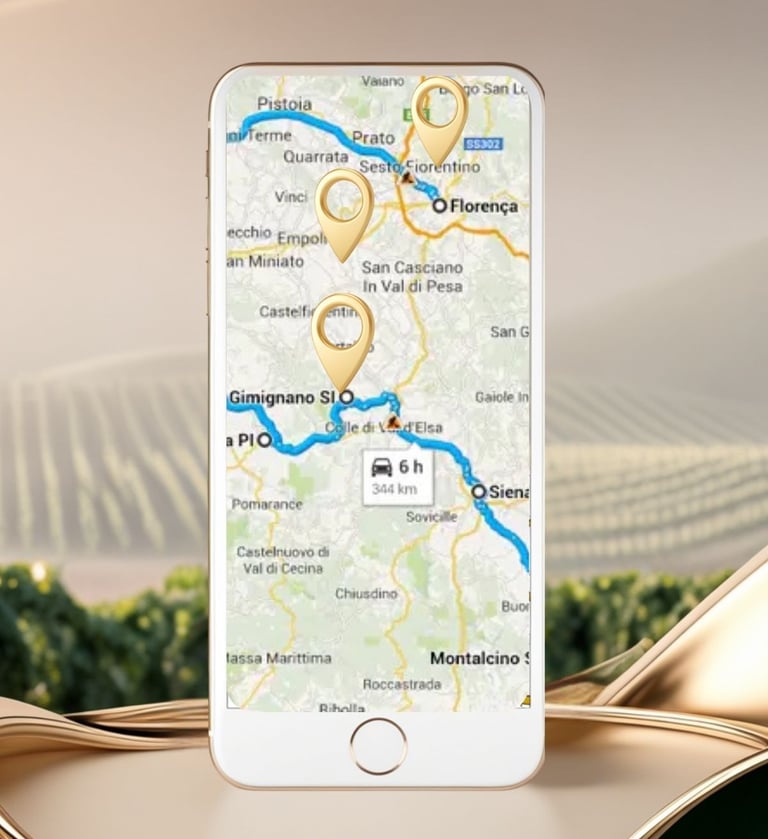
I have curated The Tuscany Sensory Map Vault, a definitive digital guide built on Google My Maps. It strips away the noise and guides you directly to the gold.
Layer 1: Gastronomy - Where to find the truest Bistecca and the most comforting Ribollita.
Layer 2: Silence - Hidden spots for meditation and escaping the crowds.
Layer 3: Nectar - The private organic wine tasting spots and olive oil producers.
Layer 4: The Lens - Exact coordinates for the most breathtaking scenic views.
ONE-TIME INVESTMENT FOR LIFETIME ACCESS USD $17.00
Contact
Call
concierge@sensoryeurope.com
Curated in Europe. Payments processed securely by Hotmart B.V. Privacy Policy Terms of Service.
© 2026 Sensory Europe. All rights reserved.
